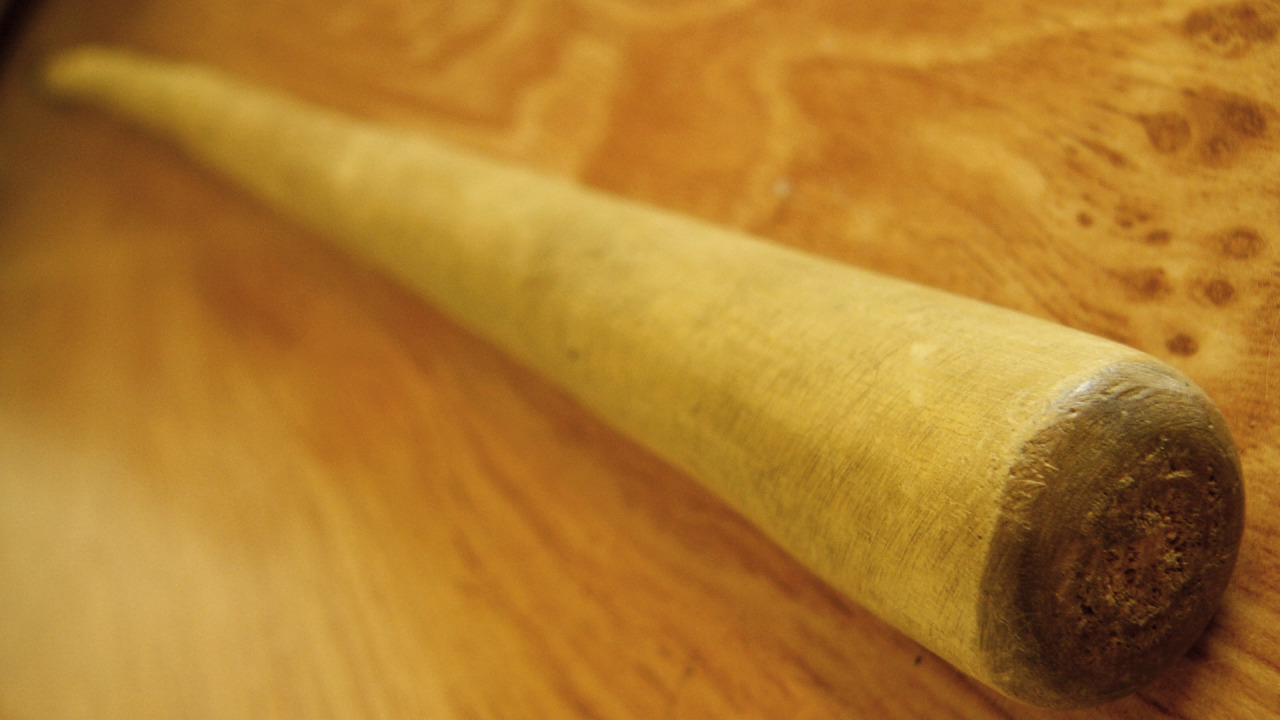
The Walking Staff in length

The walking staff

The staff as a weapon is seen in many martial arts all around the world, but being it such a simple weapon, a variation in its length can affect the way is it used in combat.

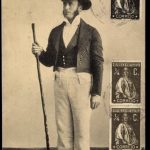
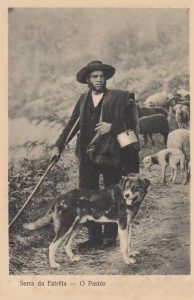
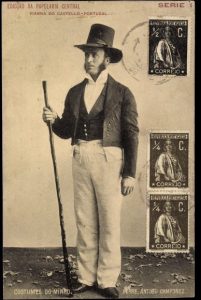
The staff in the Portuguese tradition is a walking staff, and a common “tool” in the rural areas, to drive the cattle, walk, etc, Its length emerges naturally from this functions, because, if it was much longer, it wouldn’t be as easy to maneuver when walking, and if it was much shorter, it could help on walking as a walking cane, but would not give support as a Shepherd need from his staff.

In other contexts we can see longer staffs, for example, the campinos from Ribatejo use much longer staffs, but they use it to herd cattle from the horseback, so they naturally need a longer staff.
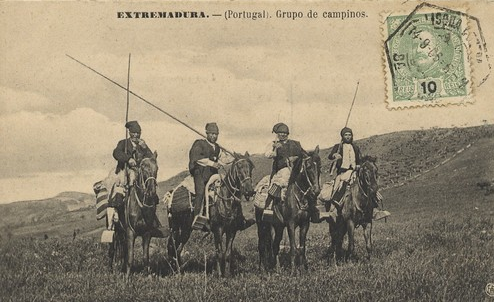
Campinos
Campinos do Ribatejo with longer staffs for hearding cattle on horseback

Prior to any standardization, the staff of jogo do pau would vary in length, but would always be kept within certain limits, usually longer than a walking cane, and never much taller than a man.
It was however, not a weapon, this staff length, was not choose for it excellence in combat, it emerged naturally, but besides its practical application in other function, it somehow has also characteristics that made it ideal in length for the context in which jogo do pau developed.

Alternative weapons

Staff fencing in Portugal had great relevance at a time when there were no other forms of defence. The policing was minimal, and a man had to defend himself, in rural and remote areas, not in cities where the streets were tighter and this weapon had a smaller application.

note: This unfortunately happened until very recently, late 19th century and even early 20th, when the National Guard was more largely deployed and started to forbid the use of the staff and actually breaking them at farmers markets and other rural events to avoid brawls.

Other alternatives to self defence were not available to the common man, as fire weapons. Pistols were not very common in Portugal even at the time when the revolver was more known in the U.S.A., here it was a rare weapon, that only much later was more wide spread, and became an alternative to the staff, but only at a time when the policing also took care of the safety problem, so it never was really much in use.

The long guns, being more common, were in many cases superior to the walking staff, however, were harder to carry, and would not be as useful in day to day life.

Swords, that are a millennial technology, were also not at the reach of the common rural worker, that is left with a simple walking staff.

In Complement to the Walking staff

Another common implement in use for its other applications other than as a weapon was a small knife.

It was a considerable weapon, when people didn’t use any kind of armor daily, and it was one more reason for the staff to be an essential item because the extra length of the staff is what would avoid conflicts at closer distances, that with everyone potentially having a knife, are much harder to control and potentially more lethal, to both sides.

With a close combat knife fight, at grappling distance, it is not only easier for both fighters to get lethally hurt, but also, it is hard to run away or escape from, while with the staff’s extra distance, there is more of a possibility of finding a way out, or one of the sides to run away if willing to, than in a knife fight. In a situation of self defence, to be able to stop the fight, by evasion, having everyone end safely is a strong benefit in general, not only for the individual, but for the society as a whole, in contrast with knife fights, where both have serious risk of ending up dead.

With that, we have one of the main functions of the staff as a weapon, that is to avoid close combat that regularly ends up in knife fights. This is the reason why practicing at keeping a long fencing distance is a great part of jogo do pau.

The length

The element of distance greatly affects the length of the staff, because it is much easier to keep opponents at distance with a longer weapon than with a shorter one, like a walking cane for example. It is still possible to reach the same goal with a walking cane, but the margin of error is much smaller.
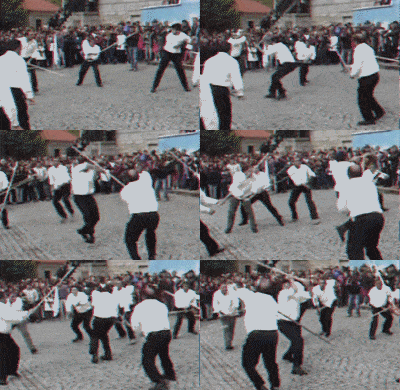
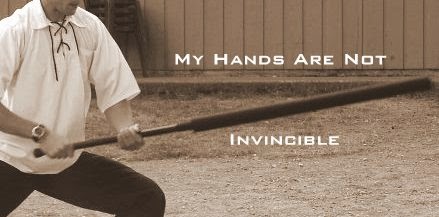
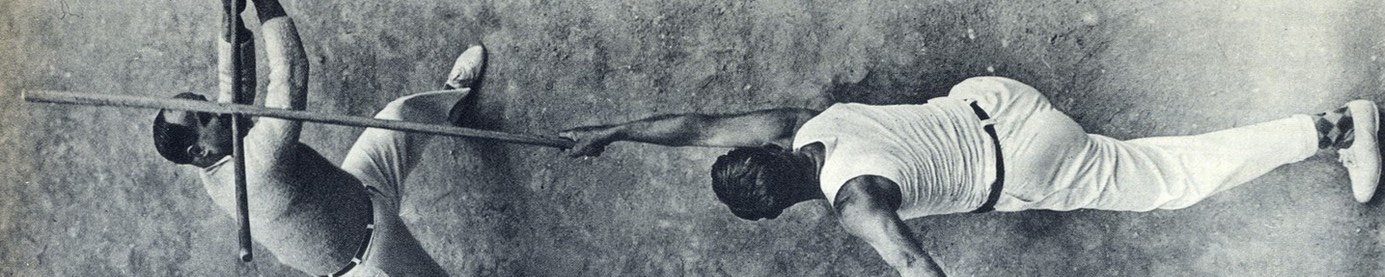
The walking staff used in continuous rotation with the turn of the body

A shorter staff is however, easier to maneuver, because of its lightness, it would however not be chosen, because a longer staff, about the height of a man would really give a distance advantage.

However, up to a limit, because a much longer staff starts to be much harder to maneuver, and the same technique stops to be ineffective in use. This limit is caused not only by the limit of strength of the person using it, but also by the weight of the fencer, because even when used correctly and with the full allocation of body weight, at some point, a much longer staff becomes slower in rotation, and would have to be used in other ways that would not grant the same advantages in speed and power generation than the traditional length employs, so that extra length would not grand advantages, and this is the natural limit to the staff’s upper length in this context.

-Frederico Martins
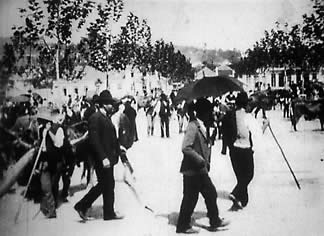
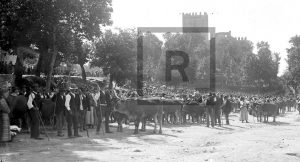
Mercado da Corujeira

FEIRA DO GADO NA CORUJEIRA - AURÉLIO PAZ DOS REIS
Feira de Gado da Corujeira

—0 sr. governador civil prohibiu o desafio do jogo do pau no mercado da Corujeira.
“Diario Ilustrado” – Domingo, 29 de Maio de 1892

EN: Mercado da Corujeira

Occasional news: “The Civil Governor prohibited the jogo do pau challenge in the Corujeira Market” – Sunday, 29 of May, 1892

note: Photo is a frame from the “Corujeira cattle Market” filmed by Aurélio Paz dos Reis in 1896. The Film maker made a jogo do pau video in the same year, that is unfortunately probably lost.


O varapau em comprimento

The walking staff in length (read in English)

O varapau português

O varapau como arma, é visto em várias artes marciais por todo o mundo, no entanto, apesar de ser das mais simples armas, o seu comprimento pode facilmente afectar a forma como este pode ser utilizado em combate.

O varapau utilizado no jogo do pau português, é uma “ferramenta” comum no meio rural, para conduzir o gado, caminhar etc… O seu tamanho surge naturalmente, pois se fosse muito mais longo, já não daria tanto jeito para caminhar ou manobrar, e se fosse muito mais curto, funcionaria como uma bengala, que poderia ajudar na caminhada, mas não serviria de apoio, como um cajado serve a um pastor.

Noutros contextos, podemos ver varas mais longas, como por exemplo, os campinos do Ribatejo, no entanto, eles utilizam esta vara para conduzir o gado a cavalo, por isso, tem necessariamente que ser mais longa.

Campinos

O cajado, ou varapau do jogo do pau, anteriormente a qualquer padronização, teria um comprimento que certamente variava, mas andava sempre dentro de certos limites, geralmente bem mais longo do que uma bengala, e nunca muito mais alto do que um homem.

(Exemplos do varapau, fotos individuais e em feira)

Não era portanto uma arma. Este comprimento do varapau não foi então escolhido por ser excelente para o combate, surgiu como já disse, naturalmente, mas apesar da sua utilização prática em várias funções, tem também características que o tornam ideal para o combate no contexto em que o jogo do pau se desenvolveu.

Armas alternativas

O jogo do pau teve grande relevância numa altura em que não existiriam muitas outras alternativas em termos de meios de defesa. O policiamento era reduzido, sendo que o homem necessitava de se defender a si próprio, e isto acontecia em meios rurais, onde os campos eram mais abertos, pois numa cidade e em ruas apertadas, esta arma teria uma aplicação mais reduzida.

Outras alternativas de defesa não estavam disponíveis ao homem comum, como as armas de fogo. Sendo as pistolas, não muito vistas em Portugal numa altura em que o revolver na América teria mais predominância, aqui esse seria de mais difícil acesso. Só mais tarde e nunca em tão larga escala, veio a substituir o varapau como arma de defesa.

As armas de fogo de cano longo, sendo mais comuns e em muitos casos superiores ao varapau, eram no entanto, de transporte difícil, e não teriam grande utilidade para uma utilização diária.

As espadas, sendo uma tecnologia milenar, não estariam também ao alcance do trabalhador rural, restando-lhe apenas o simples varapau.

Em complemento ao varapau

Era então, o varapau, quase o único meio de defesa do homem. Uma outra arma comum, disfarçada de ferramenta do dia à dia, seria a navalha, esta também com outras utilidades além do combate, não sendo de um comprimento muito longo. Era porém algo a ter em consideração, e que, de certa forma, fazia com que o varapau fosse ainda mais essencial como arma principal, pois o varapau era a única forma de evitar, com o seu comprimento, uma luta de navalhas a curta distância que seria muito mais difícil de controlar e bem mais letal. Tendo em consideração que numa luta de navalhas, é mais provável os dois combatentes saírem gravemente feridos e é também mais difícil um deles fugir de uma luta a tão curta distância mesmo que surja a oportunidade ou vontade. E sendo um dos objectivos da defesa pessoal, especialmente em caso de inferioridade numérica, a possibilidade de fugir, o varapau, de certa forma, mantinha essa possibilidade muito mais em aberto do que numa luta de navalhas.

Sendo assim, temos como uma das principais funções do varapau o evitar o combate corpo a corpo que geralmente resultaria em luta com navalhas. Por esse motivo, no jogo do pau, vemos um combate geralmente realizado a longa distância mas que tem sempre presente a possibilidade de um dos combatentes entrar em corpo a corpo, e a capacidade de evitar essa situação é também parte do treino e era uma parte essencial deste quando o jogo do pau era utilizado como forma de defesa.

Os limites do comprimento

Isto afecta o comprimento da vara, pois, quanto maior for a vara, mais fácil é manter o adversário longe e evitar o corpo a corpo, sendo preferencial ter um varapau do que uma bengala, que apesar de também permitir o mesmo resultado, tem menos margem de erro.

A vara a ser utilizada em rotação continua com a rotação do próprio corpo.

Sendo um varapau curto mais fácil de manejar, pela sua leveza e assim, poder facilitar o bater no adversário, não era no entanto o escolhido pois o alcance extra da vara longa, de cerca da altura de um homem, dava realmente uma certa vantagem. Porém, a partir de um certo comprimento a vara torna-se tão longa que já não é possível a manusear em rotação com tanta facilidade. Este limite não é causado tanto pela força muscular da pessoa, embora isso também possa pesar, mas sim, pela correcta utilização do peso do corpo no auxilio da rotação, e com varas muito maiores, essa rotação torna-se mais lenta, pois ao utilizarmos uma vara mais longa, o nosso corpo mantém-se igual, e perde-se assim, a eficácia no ataque em rotação, sendo esta proporção mais uma limitação natural do comprimento do varapau.

– Frederico Martins